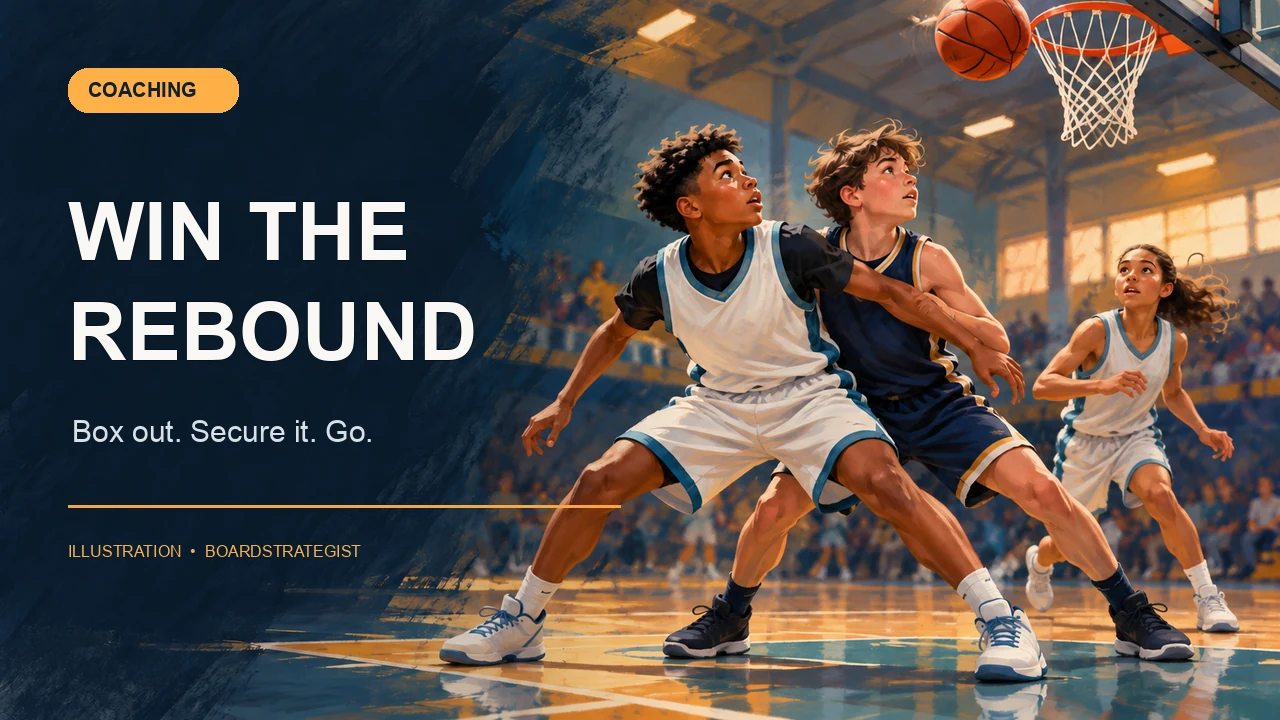
Rebounding is not only about height
A defensive possession is not over when a shot misses. It ends when the defense secures the ball. Instead of treating rebounding as one tall player’s job, give the whole team practice connecting the shot cue, finding an opponent, establishing position, and securing the ball.
A box out is not about pushing an opponent down. It is preparation: move between the opponent and the basket, maintain awareness of the ball, then secure the rebound. The Japan Basketball Association’s coaching resource page includes material on rebounding and box outs. Its page is archived, so check the current JBA materials before using it as guidance.
Connect the sequence in three stages
1. Find an opponent on the cue
Start without a ball. On a coach’s cue, each player locates a nearby opponent and moves between that player and the basket. The offensive partner moves slowly to either side. Focus on reacting, keeping awareness of the opponent, and moving under control. Do not make it a strength contest.
2. Link position to securing the ball
Move to a one-on-one exercise. When the coach signals a shot, the offensive player moves toward a rebound while the defender finds the opponent and establishes position. If you use a ball, keep the toss safe and controlled. Players who are new to contact can begin with footwork without a ball. Continue through securing the rebound rather than stopping at the initial position.
3. Check responsibilities in three-on-three
Begin with a three-on-three shot. The defenders identify who is responsible for nearby opponents, including players on the weak side and near the top. After a defender secures the ball, continue into a safe outlet pass and the next possession. For groups that are still learning the sequence, limit the offense’s movement at first and add freedom as they gain confidence.
Reflect on one action at a time
If every repetition is judged only as a rebound won or lost, discussion can become about size or luck. Ask a short question about what the player noticed:
- Did you find an opponent when the shot went up?
- Which way did you move to get between that player and the basket?
- Could you keep the ball in view and secure it?
- What did you do after securing it?
Let players describe what they noticed, then choose one cue for the next repetition. Adjust the space, pace, competition, and use of the ball for different experience levels, sizes, and comfort with contact. This three-stage progression is an editorial practice idea, not an official JBA drill sequence. Prioritize safety and current competition rules when teaching contact.
Frequently asked questions
Does everyone need to box out? The team’s defensive scheme determines who takes which opponent. Every player can practice reacting to a shot and contributing to the rebound. Agree on responsibilities as a team.
Is rebounding practice only for taller players? No. Guards and players away from the ball can help with weak-side rebounds and loose balls. Small-group exercises give everyone repetitions finding an opponent and moving.
Should players hit the opponent hard? No. The aim is not forceful contact. Teach players to read the opponent, move into position, avoid pushing with their hands, and pursue the ball. Check current competition rules and coaching guidance for contact questions.